

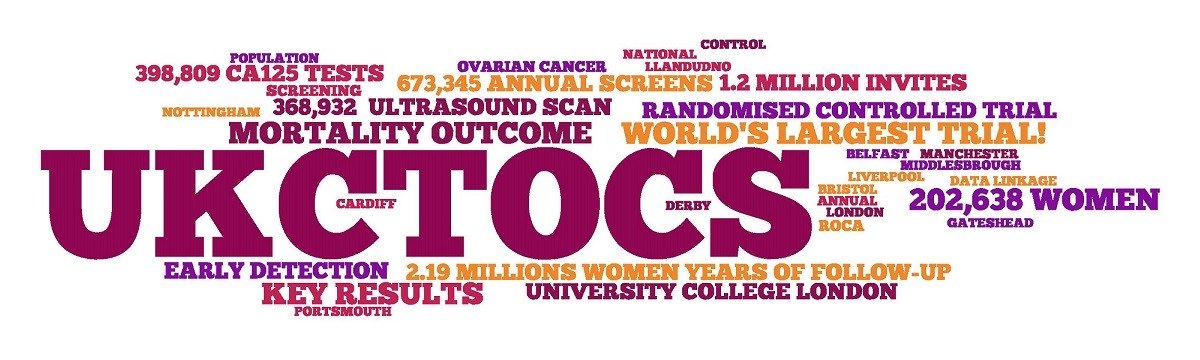
Excitement began to build just before Christmas with the publication of the results of the biggest ever ovarian cancer screening trial – United Kingdom Collaborative Trial of Ovarian Cancer Screening (UKCTOCS) – which found that deaths from ovarian cancer could be reduced by up to a fifth. Ovarian cancer is a brutal cancer with just 46% of women diagnosed surviving the disease for five or more years and any steps forward to change these devastating statistics are very much welcomed by me as a gynaecological cancer specialist nurses seeing new, individual tragedies every day.
The UKCTOCS trial represents amazing achievements on many levels. The trial ran over 15 years and successfully recruited over 200,000 post-menopausal women which were randomized to one of two types of screening methods (blood test / ultrasound) or no screening (the current situation worldwide). The ultimate aim of the trial was to investigate whether annual blood tests or annual ultrasound scans might be a useful cancer screening tool of post-menopausal women for ovarian cancer.
However the principle investigators tell us we need to be cautious with our optimism. We need to wait a further 3 years for the data to mature before they can give us the final statistical analysis. The results thus far do not demonstrate the utility for a national screening programme, and there are concerns that some women may come to harm from unnecessary surgery.
Meanwhile what does this mean for patients when they ask consultants or their GPs about screening for ovarian cancer at present, on the basis of this latest data, what should they be advise them?
- We can advise women in higher risk groups, for example those with a BRCA mutation or family history, to talk to their doctor about the utility of the ROCA test in their individual case.
- We can advise women on awareness of the sometimes subtle symptoms of ovarian cancer, and encourage them to report to their GP.
- We can educate women about reducing personal risk, for example use of contraceptive pill between pregnancies till the onset of menopause.
- We can direct women in high risk groups to research programmes such as The Eve Appeal BRCA PROTECT Research Clinic designed to support women and their families whilst researching into the mechanisms that cause ovarian and breast cancer.
So, research continues to be key in reducing deaths from ovarian cancer. Whilst these latest results may not have brought us the definitive answer on ovarian screening programmes, what it has done is taken us a significant step further towards understanding the biology of this disease in relation to early detection.
That’s 2.9 cheers for ovarian cancer!