

Diagnosed with dysgerminoma
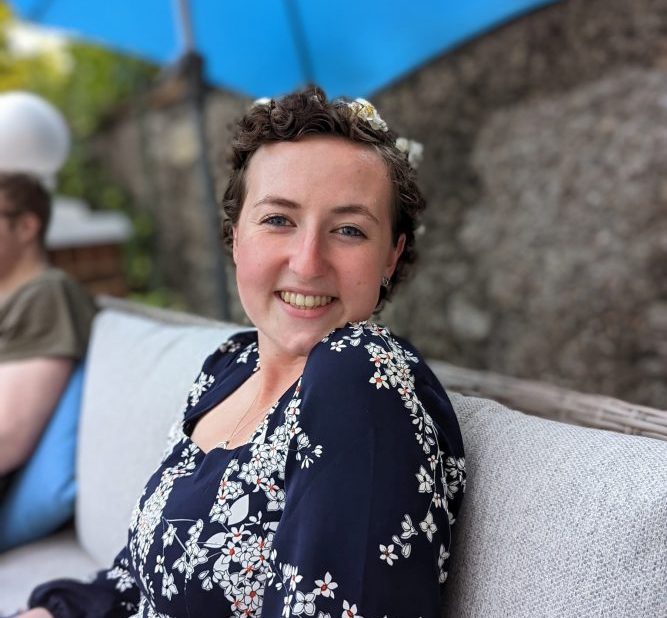
Back in 2021, at the age of 23 I was diagnosed with a rare form of ovarian cancer called dysgerminoma.
With no knowledge of the signs and symptoms of gynae cancers, and the belief that they only occurred in older women, I had kept overlooking symptoms and attributing them to other things. The diagnosis was a huge shock.
The first symptom I noticed was tiredness, but given we were in the middle of a lockdown I thought I was just feeling low and tired like everyone was at the time. I was working from home and started to get so tired that I would sleep through my whole lunch hour and then have to start taking quick power naps throughout the day.
I had just taken up a new hobby, playing beach volleyball and thought I was feeling extra tired because of this, but then I started to get really dizzy and after playing would go home and be sick. I was sick multiple times, and it would often carry on for a few days after. The sickness started to happen at other times too, not just after exercise, and got progressively worse.
The third symptom to add to the list was having to go to the toilet up to three or four times in a night and feeling thirsty all the time. I didn’t really think about what was causing me to be thirsty and I just thought I was going to the toilet more because I was drinking more.
Finally, I started to lose weight… very quickly. Again, because this all started around the time I took up a new sport and started exercising more, I thought that this was why I was getting thinner. Then my lower belly started to protrude and became hard. I naively thought this was my natural body shape and maybe this was just some ab muscle. Women are always told to check for lumps in their boobs, but there is less advice to look for lumps and bumps elsewhere – so it never even occurred to me that this could be a tumour, let alone a tumour that measured 17cm across!!
Not knowing the symptoms, I didn’t immediately put them together to think that there might be a link. However, when I rang my mum and started explaining the combination of tiredness, sickness, frequently going to the bathroom and a lower belly bump, she immediately instructed me to go and get a pregnancy test. Needless to say, after a very anxious trip to the pharmacy, the results were negative. I did another two just to be sure.
After one particularly bad weekend of not being able to eat or drink, I went to my GP. I had blood tests, another pregnancy test and she felt my belly. The doctor referred me for an urgent ultrasound, but told me it was just a precaution. The next day I was getting ready to start work when I had a call from the GP to say that I needed to get to A&E ASAP because my kidneys were really struggling. I was then admitted to the hospital and stayed there for almost a week, in which time I had a biopsy and a whole host of scans and tests.
Ten days after I first went to the GP I was diagnosed with dysgerminoma, a form of ovarian cancer that occurs predominantly in young women.
I was quickly referred up to the Royal Marsden in Chelsea where I soon started my first of four rounds of intensive chemotherapy. I also underwent a laparotomy to remove my affected ovary, fallopian tube and some lymph nodes.
Within 5 months of first visiting the GP, I completed all my treatment and received the all-important all-clear!
Egg freezing after cancer
My journey didn’t stop there however, the chemo had put my remaining ovary into a temporary state of menopause which meant hot flushes, lethargy, and a low mood was the cherry on top of it all. Fortunately, my consultant put me on hormone replacement therapy which massively helped.
Within 6 months of my last round of chemo, my ovary kicked back into action and my periods returned to normal. At this point, my consultants advised me that it would be sensible to undergo a round of egg freezing as an insurance against the unlikely case that the cancer may return in my remaining ovary.
With little understanding of what the egg freezing process would involve, I expected it to be months of hormones and a huge amount of side effects. Thankfully, to my surprise this very much wasn’t the case for me.
I went to a fertility consultant who specialises in treating those who have been through gynae cancer treatment. After one consultation we started the process.
Initially, I went for blood tests to make sure everything was ok to proceed and to check my AMH levels (a way to measure egg reserve), from this they were able to form a treatment plan in order to get the most eggs out.
I started off taking a tablet twice a day to stimulate the growth of follicles in my ovary, then once my period started I began daily injections of a follicle stimulating hormone. I had internal ultrasound scans at the clinic every few days, and after five days they instructed me to start doing a second injection each day of a luteinising hormone. I continued with the two injections each day for six days, having scans every two or three days and then they told me to do the trigger injection. The next day I went in for the egg collection, they sedated me and the whole thing was over in 20 minutes. It was relatively painless, I just had cramps for the next day or two. They managed to collect 12 and freeze 10 eggs from my one ovary!
I was surprised by how quick the process was, with the entire course taking less than a month. I fortunately didn’t experience many side effects from the hormones, I mostly only felt like it made me a bit more tired than normal. The injections weren’t as painful as I was expecting either – I’d gotten used to giving myself lots of injections during my cancer treatment and once you get through doing it the first time, it becomes so much easier.
Since completing the egg freezing cycle, I feel very fortunate that everything has returned more towards normality, and I am grateful to be able to settle back into normal life as a 24 year old! Life in your 20s shouldn’t be spent in a hospital bed and I am so grateful to the wonderful doctors and nurses who treated me, and to my wonderful family, partner and friends for being the best support group to get me through it all.
It is so important to raise the profile of gynae cancers, particularly in young women, so that we all know the signs and symptoms to look out for to get treated sooner and increase chances of successful treatment. The Eve Appeal’s work is making a huge step in the right direction to do so and it’s important to keep supporting their fantastic mission!
If Jess’s story has inspired you this Ovarian Cancer Awareness Month, you can help make gynae cancers diseases of the past by holding a bake sale, coffee morning or brunch. Find out more about how you can Make Time for Tea here.