
We’re delighted, alongside our researchers at The Department of Women’s Cancer at University College London, to be a part of the current BBC2’s health series Trust Me, I’m a Doctor, which puts health claims to the test, after the Trust Me Team completed its most ambitious study ever.
The Trust Me team tracked down researchers at the forefront of their fields, to search for answers around cancer development applying the latest cutting-edge scientific knowledge and techniques to do so. As a result, they came across our novel research programme – FORECEE – which could be applied to the study.
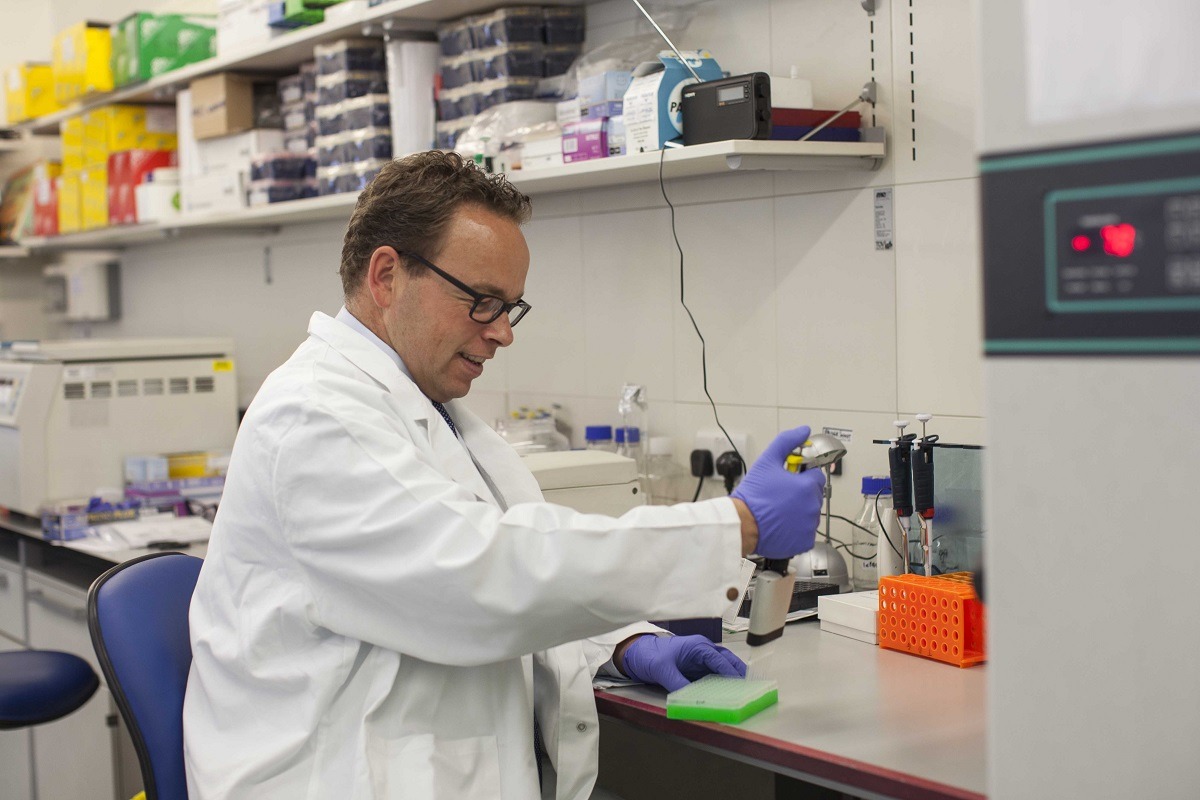
Professor Martin Widschwendter and his team have been studying how cancer starts. By looking at cells from women with breast cancer and cells from women without it, they had discovered that a key change happens in the DNA of cells before they become cancerous – a change in the packaging of the genes called DNA methylation. This change that precedes cancer can potentially be reversed.
Professor Martin Widschwendter said of the study: “We were excited to be involved in this study, because it is a proof of principle study that opens entirely new windows of opportunity to really look into how we can predict preventive measures, particularly for cancer”
Whilst the research team found no change in the DNA methylation patterns of those taking a placebo, or the turmeric in supplement form, for those adding turmeric powder to their food there was a significant change involving a gene which is known to be associated with the risk of cancer.
Athena Lamnisos, Chief Executive of The Eve Appeal said: “This is an extremely interesting development surrounding cancer development and we hope that this progress continues to help women of today, and the future, allowing us to provide an effective risk-prediction test through our own FORECEE research programme.”
Widschwendter explained that why looking at changes in DNA methylation could hold so much promise for the future of cancer prevention: “The key challenge that we have if we want to develop ways to prevent cancer is that we don’t have an endpoint – you would have to wait many years to compare the number of people who developed cancer in each group, so you need to be inventive.
This episode of Trust Me, I’m a Doctor can be watched live on BBC 2 at 8pm on Thursday 22nd September, and is available via BBC iPlayer.