
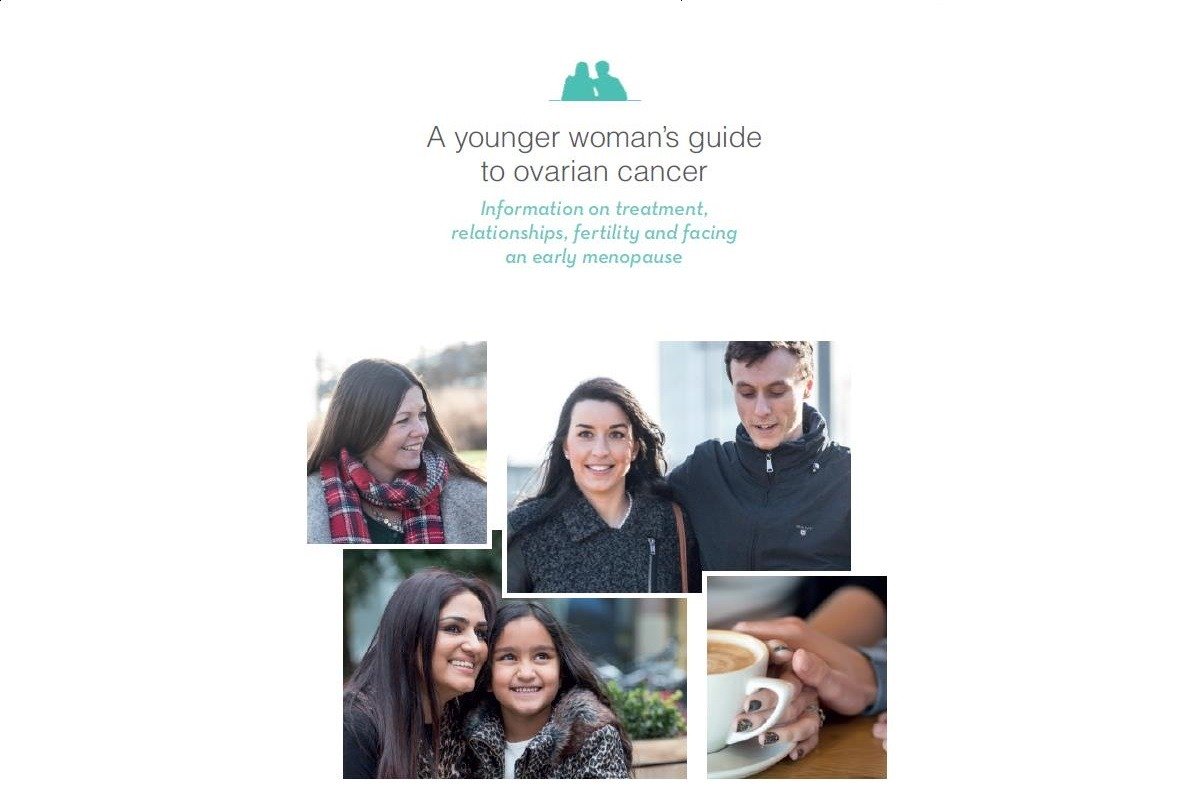
We are extremely proud to announce that A younger woman’s guide to ovarian cancer, produced together with Ovacome, Ovarian Cancer Action and Target Ovarian Cancer has been highly commended in this year’s British Medical Association (BMA) Patient Information Awards.
Every year 1,000 women under the age of 50 are diagnosed. On top of dealing with the emotions of a cancer diagnosis and the physical effects of treatment, younger women often face additional challenges including the loss of fertility, facing an early menopause, undergoing treatment whilst caring for young children, older relatives or a demanding job and struggling to cope with the financial burden a cancer diagnosis presents.
A younger woman’s guide to ovarian cancer provides crucial information, advice and signposting to help women through the emotional, physical and psychological impact.
A younger woman’s guide to ovarian cancer features advice and quotes from women who have experiences of living with a diagnosis of ovarian cancer at a younger age and it was written in consultation with health professionals with expertise in the impact of treatment.
Athena Lamnisos, Chief Executive at The Eve Appeal, said: “I am delighted that this excellent guide has been recognised by the British Medical Association and has won such a prestigious award. Younger women told us that they weren’t getting the information they needed from existing information, so this resource really is essential.”
Sarah Unwin, who was diagnosed with ovarian cancer when she was 40, features in the guide. She said: “I was delighted that the charities joined together to produce this much needed guide for younger women and we were happy to play a small part in its creation. I’m incredibly pleased that it has won this award and my hope is that every newly diagnosed younger woman is offered a copy.”
BMA President, Professor Pali Hungin, said: “I think this is fantastic resource and I particularly like that different charities have come together to work on this resource. There has been a lot of research and preparation behind this booklet but what really impresses me (apart from the co-working among the charities) is the sensitivity and respect demonstrated in the entry form that the producers have given to making as much use as possible of the patients and family participants who contributed: they collected their expertise in a variety of ways. I think the user involvement is outstanding and really impressive; this lifts the bar very high for other organisations”.