

What do we mean by abnormal vaginal bleeding?
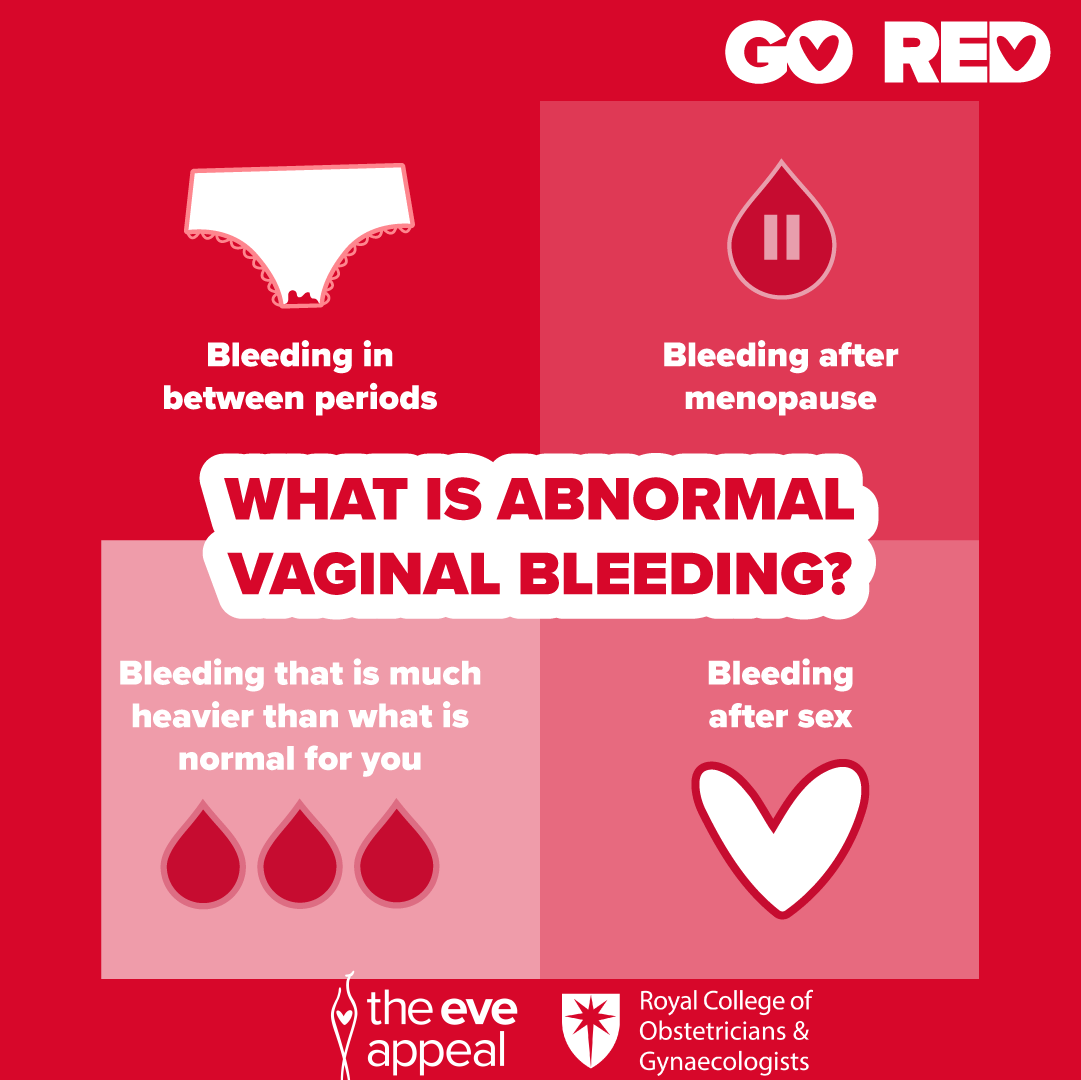
It’s a pretty broad term, right? We can break abnormal vaginal bleeding down into five main types:
- Bleeding in between periods
- Bleeding after sex
- Bleeding after the menopause
- Bleeding that is much heavier or more painful than what is normal for you
- Blood-stained discharge (when you aren’t expecting it around your period)
You first need to know your normal so that you can spot when something becomes abnormal.
Here are our tips for tracking your bleeding so that you can get bleeding checked.
- If you have periods, keep a note of them so you can see what your regular/normal period patterns look like. There are many different apps that people use to track their periods and/or fertility, but you can simply just make a note in your diary if that’s easier. You could use one red dot for ‘light flow’, two red dots for a medium flow and so on. This visual aid will help you compare/track your period month to month.
- If you don’t have periods, but any other vaginal bleeding, do track that too
- Regularly check back over your last few entries so that you can spot and report any changes.
What to track and look out for:
- Don’t disregard very heavy and/or very painful periods. What counts as a heavy period? Everyone is different and will have a different period, losing different amounts of blood, but generally speaking:
- Heavy bleeding for 7 days or more
- Pain/heavy flow that disrupts your daily activities
- If you need to change your tampon/pad every 1-2 hours or
- You need to use 2 period products at the same time
- If you have to get up during the night to change your products.
Heavy periods can happen for lots of reasons, including change in pregnancy status (miscarriage), hormonal contraception change, endometriosis and fibroids, so if something like that happens e.g. change in contraception it can take a few months to settle down, but very heavy and painful periods should be checked out. It’s unlikely to be caused by cancer, but it is also not something we should just put up with or think of as ‘one of those things’ or ‘women’s problems’.
- It’s everyone’s favourite word – discharge! Discharge is a perfectly normal part of having a healthy vagina and is how the vagina cleans itself. The amount of discharge we get varies throughout our monthly cycle, and is normally anything from a clear colour, to a creamy/light yellow. If you experience any pink, red or brown discharge, also called ‘bloody discharge’ note it down.
- Surely all bloody discharge is an abnormal bleed? Not necessarily. Some people get a bit of bloody discharge/light bleeding/spotting in between their periods. This can also be referred to as ‘ovulation bleeding’ and simply means that the change in hormones mid-cycle as an ovary releases an egg can cause some of the womb lining to shed. However, if this starts to happen and isn’t part of what you would consider ‘your normal’, then do speak to your doctor.
- It is ‘normal’ to have ‘abnormal bleeding’ through the menopause (peri-menopausal)- Going through the menopause for most people means a few years of irregular/different bleeding patterns. This is due to the ovaries beginning to essentially ‘shut down’ and hormones going (to put it bluntly) haywire. It’s normal to have shorter/longer/irregular periods as this process happens. Track your bleeding and if you have any bleeding that doesn’t seem right to you, speak to your GP or contact Ask Eve.
- There is no such thing as a post-menopausal period- Once you have not had a period for 12 months or more, i.e. gone through the menopause, any bleeding from the vagina is not ‘one last period’, final hurrah or ‘random period’, it is classed as an abnormal bleed. Note it down, when it occurred, what colour was the blood, did you have any other symptoms? The reason we say this is that a common reason for people noticing a bit of blood post-menopause is something called vaginal atrophy, which isn’t something to be worried about and can be treated with creams and moisturisers.
- Remember that post-menopausal bleeding can mean anything from a bit of pink-ish discharge through to a heavy bleed.
- Bleeding after sex is more common than people might think (if pre-menopausal). Again, most of the time it isn’t something to worry about, like cervical ectropion for example, but do note it down if it’s something you experience and visit your GP to get checked out.
- If you bleed during/after sex, also note down whether or not you are in pain. Sex isn’t supposed to be painful, and whilst something like cervical ectropion can also cause pelvic pain/pain during sex, it is still always worth investigating.
If you are worried about any symptoms you are having, or you have any questions about your gynae health, our Ask Eve nurses are here to help with free and confidential information and advice. Get in touch on nurse@eveappeal.org.uk or 0808 802 0019.